Threats to radioactive or nuclear materials can involve external or internal adversaries or both together in collusion. The external adversaries are those from outside the organization while the internal adversaries are from within the organization or other systems of the organization like contractors and service providers. An insider is any internal adversary who has authorized access (either escorted or unescorted) to protected areas, including managers, employees, service providers, visitors, inspectors. Insider threat is the potential for an insider to use their authorized access or understanding of an organization to harm that organization.
In Uganda, the Atomic Energy Council developed the Atomic Energy (Security of Radioactive Materials) Regulations, 2021 (ASR, 2021) to effectively regulate security of radioactive sources. The ASR, 2021 highlights the different regulatory requirements for security of radioactive sources. Specifically, Regulation 28(1) requires authorized persons to increase security measures in accordance with the threat (insider and external). Atomic Energy Council conducted a number of workshops with the operators of facilities with radioactive sources to equip them with knowledge and skills for radiation safety and nuclear security principles required during the entire lifetime of their radioactive sources including mitigation of insider threats.
Strategies for mitigation of insider threats
The insider threat may be mitigated by the following ways;
a) Maintain security awareness
b) Implement special programs (Structured Trusted Employee Program; Human Reliability Program; etc.)
c) Conduct supervisory reviews via observation and performance
d) Medical and psychological evaluation
e) Management decisions (for example, initial or periodic drug testing)
f) Trusted official reviews of personnel (criminal or financial elements)
g) Implement physical controls such as;
Barriers, access control points (effective outsider threat mitigation techniques)
Compartmentalizing facilities and work areas
Conduct atypical or non-routine assessments
Report a Radiation Incident
If you suspect that an incident or an accident may have involved a radioactive material, please report to the nearest police station and to the Atomic Energy Council on the contacts provided below. Stay as far away from the scene of the incident as possible.
Non-ionizing radiation refers to any type of electromagnetic radiation that does not carry enough energy per quantum to ionize atoms or molecules. Sources of non-ionizing radiation are both natural and artificial…
1.0 Introduction
Non-ionizing radiation refers to any type of electromagnetic radiation that does not carry enough energy per quantum to ionize atoms or molecules. Sources of non-ionizing radiation are both natural and artificial as follows:
(a) Examples of Natural sources of Non-Ionizing Radiation
(i) Sunlight
(ii) Fire
(b) Examples of Artificial sources of Non-Ionizing Radiation
(i) Telecommunication masts
(ii) Power transmission lines
(iii) Microwave ovens
(iv) Radars
(v) Metal detectors
(vi) Cell phones
(vii) Wi-Fi routers etc.
2.0 APPLICATIONS OF ARTIFICIAL SOURCES OF NON –IONIZING RADIATION AMENABLE TO REGULATORY CONTROL.
There are several useful applications of non-ionizing radiation sources in our daily lives.
Some of the applications amenable to regulatory control include; a) Telecommunication base stations Base stations are wireless communications stations that allow mobile phones to make calls, send data, and use other services. These masts are all over the country.
As of June 2024, there were 5,104 base stations and 4,999 tower sites in Uganda (Source: UCC Market Performance Report FY 2023/2024) b) High voltage power transmission lines and transmission substations A high voltage line is a power line that carries electricity at a voltage of 36kV or higher, while a substation is a part of an electrical generation, transmission, and distribution system used to transform voltage from high to low, or the reverse.
Line lengths as of September 2024 were; (i) 66kV: 35.2km – Total transmission grid length: 4633km (ii) 132kV: 3,743.4km – Number of transmission substations: 39 (iii) 220kV: 556km (iv) 400kV: 496km (Source:https://www.era.go.ug/index.php/stats/transmission-stats/transmission-network-length) c) Magnetic Resonance Imaging(MRI) Scanners MRI scanners are large tube-shaped machines that use radio waves and strong magnetic fields to create images of the inside of the body. In the medical field, they are used for diagnostic purposes.
There were 16 facilities as of September, 2024 (Source: Uganda Medical and Dental Association database)
3.0 THE NEED FOR REGULATION
Whereas non-ionizing radiation has useful applications, there are some instances where exposure needs to be regulated especially for man-made/ artificial sources. Therefore, in order to protect the society and the environment from the harmful effects of non-ionizing radiation, safety limits are established above which biological and health effects may occur to the exposed victims.
According to the International Commission on Non-Ionizing Radiation Protection (ICNIRP) Guidelines of 2020, radiofrequency exposure levels should not exceed 100%. Similarly, exposure levels from high voltage lines should not exceed 200µT where there is perceived occupancy.
Prolonged exposure to low frequency magnetic fields may cause; a) Short-term health problems such as Dizziness, Fatigue, Insomnia, and headaches. b) Long-term health effects such as memory and perception impairment, brain malfunction and neutralizes sperm. c) Miscarriage, tumor growth and skin growth, and deficiency in the immune system in animals. d) Stunted growth, reduced root length and decolorized leaves in plants. e) When it comes to machines, they interfere with aircraft and other communication systems.
4.0 ROLE OF ATOMIC ENERGY COUNCIL
Section 1(3) of the Atomic Energy Act Cap. 154, provides for the Council to apply the provisions of this Act in handling sources of electromagnetic radiation other than X-rays and gamma rays. This provision gives the Council the mandate to regulate the safety aspects of non-ionizing radiation sources and applications in Uganda.
In order to ensure the safety of society and environment from the harmful effects of excess exposure to non-ionizing radiation, Atomic Energy Council (AEC) carries out assessments in highly occupied settlements to verify if the safety limits are not exceeded.
5.0 PROGRESS MADE IN THE REGULATION OF NON-IONIZING RADIATION IN UGANDA.
a) Gazetting of the Statutory Order Atomic Energy Council gazetted The Atomic Energy (Application of provisions of the Atomic Energy Act, 2008 to sources of Electromagnetic Radiation) Order, 2023 in 2023. This order empowers Council to apply the provisions of the Atomic Energy Cap 154 to the sources of electromagnetic radiation other than X-rays and gamma rays. b) Draft Regulations In line with Section 72 of the Atomic Energy Act Cap. 154 Atomic Energy Council drafted the Atomic Energy (Non ionizing Radiation Protection) Regulations, 2024 which are still in the process of development. c) Radiofrequency Exposure Assessments AEC has conducted non ionizing radiation assessments around Telecommunication masts and base stations at nine hundred and twenty four (924) sites in one hundred and six (106) districts as of December 2024. The findings of the inspections indicated that Radiofrequency exposure levels were less than the maximum acceptable radiation level of 100% as per the International Commission on Non-Ionizing Radiation Protection (ICNIRP) guidelines, 2020.
AEC Inspectors measuring RF radiation levels at Kasodo Primary School in Kasodo sub county, Pallisa district
AEC Inspectors measuring RF radiation levels at Kasodo Primary School in Kasodo sub county, Pallisa district
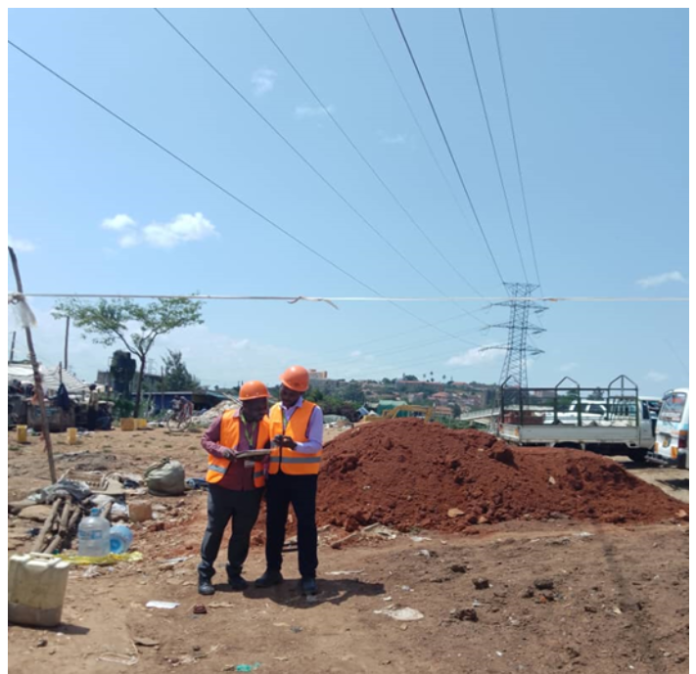
AEC has also conducted assessments along High Voltage power transmission lines in order to determine the extent of the radiation exposure to non-ionizing radiation received by the staff and other people around the high voltage power transmission lines. The assessments have been carried out at thirty (30) locations in seven(07) districts as of December, 2024. The results from the areas assessed indicate that the maximum radiation levels were less that the recommended maximum safety limit of 200µT as described in the ICNIRP General Guidelines on Low Frequency, 2010.
AEC inspectors measuring ELF radiation levels at Villa Park opposite Arena Mall along Nsambya Road
AEC inspectors measuring ELF radiation levels at Villa Park opposite Arena Mall along Nsambya Road
6.0 CONCLUSION
Regulatory intervention on non-ionizing radiation is important for public assurance as well as ensuring the non-ionizing radiation emissions from artificial sources stay below the safe limits. The public is advised to comply with the guidance issued by authorities from time to time.
The Atomic Energy Council (AEC) under the Ministry of Energy and Mineral Development is an independent government body established under the Atomic Energy Act Cap.154 with the mandate to regulate the peaceful applications of ionizing radiation in order to provide for the protection and safety of individual, society and the environment from dangers resulting from ionizing radiation. The use of ionizing radiation in Uganda is in the medical, industrial, security, agriculture, research and education among other fields. Despite the beneficial uses, sources of ionizing radiation must be managed in a safe and secure manner throughout their life time to prevent short- and long-term effects of ionizing radiation that may arise as a result of improper use or mishandling. In this regard, Section 31 (1) of the above Act, prohibits any person to acquire, own, possess, operate, import, export, hire, loan, receive, use, install, commission, decommission, transport, store, sell, distribute, dispose of, transfer, modify, upgrade, process, manufacture or undertake any practice related to the application of atomic energy and regulated by the Act unless permitted by an authorisation issued by AEC.
As of July 08, 2026, AEC had registered one thousand three hundred and forty three (1343) radiation sources in seven hundred twenty facilities. Out of the registered radiation sources, 746 (56%) had valid licenses in three hundred seventy nine (379) facilities. The details of authorisations are hereunder indicated.
The Regulatory infrastructure to regulate the peaceful applications of Ionising Radiation; to establish the Atomic Energy Council; to provide for the protection of the public and environment against the dangers of ionizing radiation in Uganda.
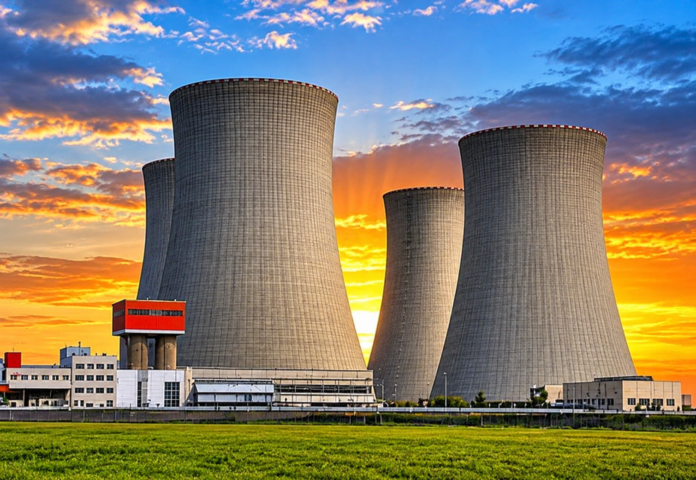
The Government of Uganda has embarked on the development of nuclear energy for electricity generation, research and production of radiopharmaceuticals. This commitment aligns with the aspirations of Uganda Vision 2040, the Energy Policy 2023, and the Fourth National Development Plan (NDP IV). To support this national agenda, the Atomic Energy Council (AEC) is strengthening its regulatory capacity to effectively oversee the safe and secure development of the nuclear installations in compliance with international obligations and national nuclear safety and security requirements. Atomic Energy Council is a government body established under Section 3 of the Atomic Energy Act Cap. 154 with a mandate to regulate the peaceful application of atomic energy, for the protection of the people and the environment from the harmful effects of ionising radiation.
Structure of the Regulatory Framework
The regulatory framework for nuclear installations comprises of a hierarchy of legally binding instruments which include; a) The Atomic Energy Act Cap. 154 b) Subsidiary legislations (Regulations) c) Regulatory guides and standards The Atomic Energy Act Cap. 154 is currently under review to address the missing provisions related to the handling, transport and use of nuclear material and to strengthen the mandate of Atomic Energy Council, among others.
Basis of AEC’s regulatory documents
The regulatory documents developed by AEC are anchored on requirements, standards and guidelines issued by the International Atomic Energy Agency (IAEA) as well as research findings by the International Commission on Radiological Protection (ICRP), the United Nations Scientific Committee on the Effects of Atomic Radiation (UNSCEAR), and other research bodies. Atomic Energy Council also consults experts from regulatory bodies from Countries with experienced nuclear regulatory infrastructures such as the United States Nuclear Regulatory Commission (US NRC), among others. The above international standards provide the fundamental principal criteria for nuclear and radiation safety, nuclear security and nuclear safeguards, including risk criteria and dose limits for both normal operation and potential exposure scenarios, applicable to workers and members of the public.
Key safety principles for nuclear installations
In the regulation of nuclear installations, AEC’s priority is to ensure that the authorised persons/utilities adhere to the following core safety principles as follows: a) Defense-in-depth (DiD) b) Radiation protection c) Proven engineering practices d) Quality assurance e) Safety Culture f) Independent peer reviews g) Human factors h) Graded approach i) Operating experiences and research The above safety principles collectively ensure that risks are managed within acceptable limits and that regulatory decision-making is consistent, transparent, and aligned with the International Safety Standards.
Guiding principles in the development of AEC’s safety criteria
The following principles underpin and form the basis of the AEC’s criteria for ensuring safety: a) Regulatory independence: AEC’s independence is entrenched under Section 12 of the Atomic Energy Act Cap. 154 which ensures that regulatory decisions are made and regulatory enforcement actions taken, without undue pressure and influence from interested parties. The credibility of the AEC is assured through its independence from the facilities it regulates and the promoters of nuclear technology. b) Responsibility for safety: The prime responsibility for safety rest with the person or organization responsible for facilities and activities that give rise to potential nuclear damage. c) Civil liability to nuclear damage: The operator of a nuclear installation is strictly liable for compensation associated with nuclear damage. d) Leadership and management for safety: Effective leadership and management for safety should be established and sustained in organizations concerned with, and facilities and activities that give rise to, potential nuclear damage. e) Radiation protection: Protection of the workers has to be optimized to provide the highest level of radiation protection and nuclear safety that can reasonably be achieved (ALARA). f) Prevention of accidents: The authorised person/utility has to make all practical efforts to prevent and mitigate nuclear or radiation accidents. g) Emergency preparedness and response: The authorised person/utility has to make arrangements for emergency preparedness and response in case of nuclear or radiation incidents. h) Protection of the future and present generations: People and the environment, present and future generation, must be protected against radiation risks. This can be achieved by ensuring that appropriate means are available for long term management of spent nuclear fuel and radioactive waste generated during the life time of the nuclear installation. i) Safety assessment: The utilities/authorised persons must demonstrate effective understanding of the hazards and their control for an action or facility through a comprehensive and systematic process of safety assessment. The safety assessment has to incorporate both deterministic and probabilistic approaches where appropriate. j) Safety policy: The utility or operating organization must anchor nuclear and radiation safety on a well written safety policy in support of a sound safety culture. Nuclear and radiation safety should have an overriding priority in all authorised actions. k) Staffing and competence: Organizations involved in the lifecycle of a nuclear facility or activity must be staffed with competent and sufficient qualified personnel having proper awareness of the technical and administrative requirements for safety.
Strengthening regulatory capacity for nuclear installations
With Uganda advancing towards the construction of a nuclear research reactor and nuclear power plants to catalyze the social and economic transformation, AEC is intensifying efforts to strengthen its capacity through education and training, to provide regulatory oversight. Strengthening the regulatory framework for nuclear installations is a cornerstone of Uganda’s nuclear energy programme. Through the Atomic Energy Council, Uganda is ensuring that the development of nuclear technology proceeds with the highest levels of safety and environmental protection, in line with international best practices and national aspirations for sustainable development.
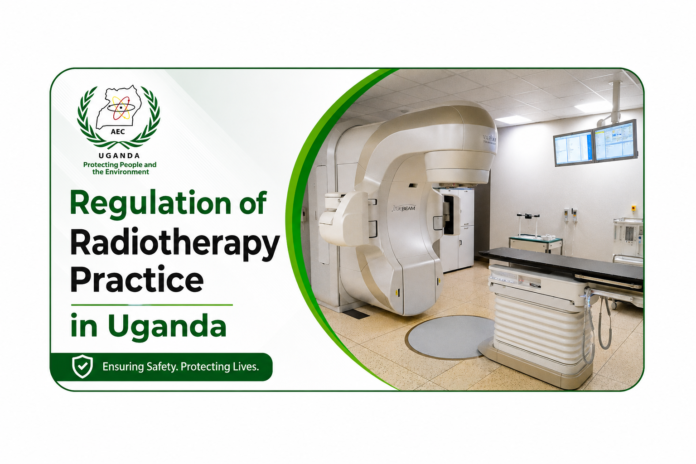
Radiotherapy is a critical component for the curative and palliative treatment of cancer. It is considered to be a necessary component of treatment for over 50 percent of all cancer patients…
Understanding Radiotherapy
Radiotherapy is a cancer treatment modality that uses high doses of ionizing radiation to kill cancer cells and shrink tumors. This is done by delivering high-energy particles or waves, such as X-rays, gamma rays, electron beams or protons directly to a tumor, or intended target to destroy or damage the cancer cells using specialized equipment like Linear accelerators.
Radiotherapy is a critical component for the curative and palliative treatment of cancer. It is considered to be a necessary component of treatment for over 50 % of all cancer patients. The decision to use radiotherapy for patient treatment is determined by a physician and this depends on the type and stage of the cancer, the size and location of the tumor, and the person’s general health. A team of qualified experts with the appropriate knowledge, skills and experience in radiation oncology, medical physics and radiation therapy technology is involved during planning and delivery of the treatment.
In Uganda, radiotherapy services are offered at the Uganda Cancer Institute (UCI), located on Mulago Hill in Kampala. The government plans to expand radiotherapy services across the country, with establishment of regional cancer centers in Gulu, Arua, Mbarara and Mbale regional referral hospitals. The radiotherapy practice in Uganda is regulated by the Atomic Energy Council (AEC) to ensure the safety of the patients, workers, and the members of the public from the adverse effects that may arise from use of radiation. AEC provides an adequate regulatory framework to guarantee the safe use of radiation sources in radiotherapy for the benefit of the patients, while ensuring radiation protection and safety of the workers.
Status of cancer incidences in Uganda
According to the Uganda Cancer Institute (UCI, 2024), there are 34,008 new cases of cancer in Uganda per year. The UCI receives only 20% of these cases (6,000 to 7000) of which 600(10%) are children). The International Agency for Research on Cancer Global cancer observatory (Globocan 2022) estimates that in Uganda, breast and gynecological cancers are responsible for over 33.8 % of all female cases, while Kaposi sarcoma and prostate cancer account for nearly 34 per cent of male occurrences. These types of cancers can effectively be treated with radiotherapy. The number of annual cancer-related deaths in Uganda exceeds 24,600.
Radiotherapy treatment may be recommended in cancer management for several purposes including: enhancing the effectiveness of a surgery, reducing or curing early stage cancer, stopping cancer from spreading to another part of the body, treating cancer that has returned and relieving symptoms of advanced cancer.
Achievements and success stories in radiotherapy
The Uganda Cancer Institute has invested in state-of-the-art treatment equipment which has played a pivotal role in elevating the standard of cancer care. These advanced technologies significantly enhance the accuracy of diagnoses, the precision of treatments, and ultimately improve patient outcomes. The Institute currently operates 03 linear accelerators (LINACs) for external beam radiotherapy, 02 high dose brachytherapy after loader systems for internal beam radiotherapy, treatment planning systems, and a CT simulator. The introduction of LINACs at UCI marks a significant advancement in radiotherapy as they are highly effective at delivering high-precision radiation therapy to cancer patients, particularly those with breast, prostate, and head and neck cancers. These machines are recognized globally as the gold standard in radiation therapy, ensuring optimal treatment results while minimizing damage to healthy tissues. As the Institutes continues to rapidly adopt advanced radiotherapy technology, establishing partnerships provides significant advantages to enable proper cancer management in Uganda. Collaboration with international organizations including the International Atomic Energy Agency (IAEA) has enabled the Institute to build the required infrastructure, training healthcare professionals and hence improvement of cancer services. The ongoing construction of modern radiotherapy bunkers and extension of radiotherapy services across the regional cancer centres in Gulu, Arua, Mbarara and Mbale Regional referral hospitals represents UCI’s commitment to future-proofing of its services. The planned facility will house state-of-the-art linear accelerators and brachytherapy equipment, positioning Uganda at the forefront of cancer treatment technology in Sub-Saharan Africa. Through the IAEA Rays of Hope Initiative that focuses on providing support to member states in establishing or improving their cancer treatment infrastructure, including radiotherapy, medical imaging, and nuclear medicine, Uganda has obtained support, including comprehensive assessments, development of national cancer control plan, procurement of equipment, and capacity building of staff.
Why Regulation is Critical
Radiotherapy equipment such as Co-60 units, linear accelerators and HDR brachytherapy systems emit ionizing radiation. Improper use or malfunction of the equipment may lead to radiation injuries, which depending on the radiation dose, has the potential for short-term and long-term effects. Short-term effects may occur with exposure to high doses over a short period, while long-term effects can arise from exposure to smaller doses over an extended time. The most common early side effects, such as nausea and fatigue, typically do not last long as they may begin during or shortly after treatment and usually resolve within a few weeks. In contrast, late side effects, such as secondary cancers may take years to manifest.
Figure 1: Linear Accelerator for external beam radiotherapy
While radiotherapy is primarily a treatment for cancer, improper application can paradoxically lead to the development of cancer and underscores the critical need for regulation of the radiotherapy practice.
Regulation of radiotherapy practice in Uganda
Atomic Energy Council has developed measures to guide facilities on the required infrastructure, resources, including the roles and responsibilities of the different stakeholders involved in radiotherapy practices. The following regulatory activities are performed by AEC to regulate the practice.
a. Development of regulations and safety guides AEC developed the Atomic Energy Regulations, 2012, which outline the requirements that facilities with radiation sources must follow as part of their quality management systems. Additionally, a stand-alone regulation focused specifically on radiation safety in radiotherapy practice is currently under development.
To facilitate compliance, AEC has issued guidelines that provide further clarification on the regulations including a guidance document to assist facilities in establishing new radiotherapy services or improving existing ones. This guide encompasses all essential elements, including infrastructure needs, professional personnel requirements, specific equipment, and training needs. AEC has also created guidelines for conducting radiation survey measurements in radiotherapy facilities, along with a guide on safe operation of radiotherapy practice.
b. Review of designs and layout of radiotherapy facilities Before any construction work begins, AEC reviews the designs and layouts of proposed radiotherapy facilities to ensure that they meet national and international standards. This includes using appropriate materials, ensuring adequate bunker (room) spacing, and implementing well shielded walls to minimize radiation exposure to the members of the public and the workers.
c. Conduct of compliance inspections for radiation safety and security AEC conducts periodic inspections of radiotherapy equipment and radioactive sources in facilities to verify compliance with the Atomic Energy Regulation, 2012, and the licensing conditions. These inspections focus on ensuring patient protection during treatment, monitoring workers’ radiation exposure, confirming that radiation generating equipment operate within acceptable criteria for accurate dose delivery, and securing radioactive sources against malicious intent. Additionally, inspections are conducted prior to the issuance or renewal of licenses to verify compliance with radiation safety standards. Facilities are inspected before an authorization is granted for the construction, possession, and use of radiation sources for patient treatment, as well as during the decommissioning of facilities or radiation sources. Routine inspections are conducted bi-annually to ensure that established procedures are effectively implemented.
d. Licensing of the radiotherapy equipment Upon submission of an application by a facility intending to undertake radiotherapy, AEC reviews and assesses the application submitted and an appropriate authorization is issued to a facility after attaining the minimum radiation safety and security requirements. These authorizations include permits to import radiation sources, transport radioactive source(s) and license to possess and use radiation sources used in radiotherapy.
Preauthorization inspections are conducted to verify the accuracy of the information provided in the application forms before an authorization is issued, including the submitted designs and layout of the facility, quality assurance program, safety assessment, emergency plan, local rules and treatment protocols. Through these inspections, AEC verifies the competence of the personnel who prescribe and plan the radiotherapy treatment and those who operate the radiotherapy equipment.
Figure 2: The AEC inspectors and the facility representatives during the entrance briefing
e. Occupational monitoring of the radiation workers Radiation workers in radiotherapy are exposed to radiation during their duties, necessitating careful occupational radiation exposure monitoring to ensure their safety and prevent adverse effects. AEC oversees the radiation exposure of radiation workers and provides timely results to assess their safety levels.
To facilitate this monitoring, workers wear special chips that measure radiation exposure. Specialized equipment is used to read these chips and provide radiation dose readings, quantifying the amount of radiation received over a specified period, typically three (03) months. This system enables AEC to determine appropriate actions based on the levels of radiation exposure, ensuring the ongoing safety of the radiation workers.
Conclusion
New technological advances in radiation therapy have made life better for cancer patients in recent years by making treatments quicker, more accurate and effective. The Ministry of Health through the Uganda Cancer Institute is planning a decentralized approach to extend cancer related services to rural areas by putting in place regional cancer centers in Uganda. Atomic Energy Council appreciates operators and encourages them to be vigilant in the management of radiotherapy facilities, conduct public awareness about radiation safety. Facilities are encouraged to meet the required regulatory requirements to ensure radiation protection, safety and nuclear security. There is need to continuously advocate for increased investment in radiotherapy infrastructure, training of personnel in the radiotherapy area for both operators and the regulator.
Radiation Safety Measures in Radiotherapy practices in Uganda
In line with the Atomic Energy Regulations (AER), 2012, workers must not exceed the dose limit of 20 mSv/year averaged over 5 years and 50 mSv in a single year, while members of the public are not allowed to exceed a dose limit of 1 mSv/year under normal operating conditions.
Introduction
Radiotherapy is a cancer treatment technique that uses high doses of radiation to target and destroy cancer cells and tumors. Various practitioners work in radiotherapy, including Radiation technologists or radiographers, medical physicists, Radiation oncologists, Engineers, and Nurses. Because they work with high levels of radiation, these medical professionals can be exposed to radiation. If they are not properly protected, radiation exposure can lead to negative health effects. Think of radiation like the sun; too much sun can burn your skin or cause long-term damage, but with proper protection like sunscreen, you stay safe. In the same way, workers in cancer treatment centers need special safety measures to protect them from the invisible rays used to treat cancer.
Radiation exposure can have different effects depending on the amount and duration of exposure. If a person receives a large dose of radiation over a short period, they may experience immediate, short-term effects. Conversely, exposure to smaller doses over a long time might lead to long-term health risks. It’s therefore essential that radiation workers follow safety measures to minimize their risk.
Workers are at the forefront of life-saving cancer treatment efforts in radiotherapy, and their safety remains a top priority for the Atomic Energy Council (AEC). Through effective regulation, continuous education, and partnership with stakeholders, the AEC is steadfast in its mission to ensure that Uganda’s radiotherapy services are safe, secure, and of the highest quality. While radiotherapy benefits patients, workers are occupationally exposed to ionising radiation and must be protected
Current Status of Radiotherapy in Uganda
Uganda currently has one radiotherapy cancer treatment centre located in Mulago. The Atomic Energy Council, a government body overseeing the safe use of radiation, sets important guidelines for how radiation should be used in medical practices. As the government plans to establish more regional cancer centres to expand radiotherapy services nationwide, the need for effective radiation safety measures will become even more important to ensure that these new centres follow regulatory requirements to help protect both patients and healthcare workers.
Radiation Risks in Radiotherapy Practice
While radiotherapy is primarily intended as a treatment for cancer, it involves radiation exposure, which can have adverse effects. Radiation exposure can lead to both short-term and long-term effects, depending on the amount of radiation received. Short-term effects may occur with high doses received over a short period, while long-term effects can result from smaller doses accumulated over a longer period. Early side effects arise during or shortly after treatment and usually resolve within a few weeks. The most common early side effects include nausea, burns, skin reactions, fatigue, etc. Late side effects, such as cataracts and secondary cancers, as well as other complications affecting the lungs or heart, may develop over time.
In radiotherapy, workers may be exposed to external radiation from scatter radiation during normal operations and accidental situations, such as source misplacement, equipment malfunction, and inadequate shielding. The potential effects of radiation are classified into two categories: stochastic effects, which are probabilistic and do not have a dose threshold, and deterministic effects, which occur only after exposure exceeds a specific minimum threshold.
Radiation Safety Measures for occupationally exposed workers in Radiotherapy
In radiotherapy, ensuring the safety of workers from radiation is crucial. Here are some key safety measures that help protect them:
Design of Treatment Facilities/Engineering controls: The rooms where the treatment machines are located (called bunkers) are specially built to reduce radiation leakage outside the containment. They use concrete to build walls and lead for the doors to keep radiation inside, which protects both workers and the members of the public. Other materials are also used to achieve the same shielding purposes.
Inherent Safety Systems: The treatment machines have built-in safety features, for example, they won’t generate radiation if the door is open, and the collimator automatically shuts off to avoid unintended exposure. This helps prevent accidental exposure. There are also alarms that alert staff if radiation levels become too high, ensuring everyone stays safe.
Adherence to Safety Principles: Workers are trained to follow important safety rules, such as working in shifts to reduce the radiation exposure per person, keeping a safe distance from treatment machines, and standing behind protective barriers. These practices help create a safer environment for everyone.
Following Standard Operating Procedures: There are clear rules to reduce radiation exposure. For example, workers must wear their protective clothing before operating the machine and should never treat a patient if the treatment room door is open. Following these rules ensures safety for both workers and patients.
Education and training of radiation workers: Workers are trained to follow important radiation safety principles. These principles help reduce their exposure to radiation, such as spending less time in areas where radiation is present, keeping a safe distance from the treatment machines, and always standing behind protective barriers or shields. Together, these measures create a safer environment for everyone involved.
Adherence to Dose limits/Dosimetry monitoring: These are limits on radiation exposure that are established to ensure that radiation exposure to the workers does not exceed certain levels, preventing deterministic effects and reducing the probability of stochastic effects from occurring. The Atomic Energy Council sets the exposure levels, and investigations are conducted if a worker reaches these limits. In line with the Atomic Energy Regulations, 2012, workers must not exceed the dose limit of 20 mSv/year averaged over 5 years and 50 mSv in a single year, while members of the public are not allowed to exceed a dose limit of 1 mSv/year under normal operating conditions.Licenses are further required to set levels at which, if a worker reaches such doses, an investigation is conducted. These are called dose constraints and are established to ensure that workers don’t exceed dose limits.
Dose Assessment of radiation exposure to the Occupationally Exposed workers: Although measures are taken to reduce radiation exposure to workers, some radiation exposure is unavoidable because these individuals work in radiation-prone zones. As such, measures are put in place to assess and quantify how much radiation is received by the workers to ensure that the radiation received does not exceed a specific level, “the Dose limit” established by the Atomic Energy Council. Special devices are used to assess the doses of workers. Figure 1 shows a thermoluminescent dosimeter (TLD) used to measure radiation received by workers, and Figure 2 demonstrates the wearing of the TLD. Workers wear special chips which are then read using specialised equipment. After reading, a dose amount is received to determine how much each chip captured, which in turn indicates how much the person wearing it accumulated. This helps determine the doses and assess how far workers are from reaching the established dose limits.
As the nation embraces the benefits of nuclear technology using radiation sources in various sectors including medical, industry, agriculture, it is crucial to ensure that frameworks are in place for timely and coordinated response to a nuclear or radiological emergency. Section 8 (k) and (l) of the Atomic Energy Act, Cap 154 (Act) requires the Atomic Energy Council (AEC) to assist in emergency responses to radiological incidents and to initiate, recommend or provide support on interventions relating to radiological emergencies, as may be appropriate. Atomic Energy Council (AEC) is taking significant steps to strengthen the country’s preparedness and response to nuclear and radiological emergencies…
The CT scanner is one of the best diagnostic modalities currently, however, it is associated with high radiation doses to the patient. AEC has put in place measures to ensure radiation safety and nuclear security…
Introduction
Computed Tomography (CT) scanners are medical imaging equipment that are used to diagnose different parts of the body. They produce detailed images in form of slices that help medical personnel to detect injuries and diseases. Atomic Energy Council (AEC) has so far registered sixty-two (62) scanners in 61 facilities countrywide. The CT scanner is the most preferred diagnostic modality than the plain radiography, as it offers more 3D images that provide more detail therefore making the diagnosis of conditions much easier and faster. However, CT examinations are associated with higher radiation doses compared to the other diagnostic equipment requiring effective regulation of the practice in order to optimize the dose received by patients undergoing CT examinations and, to protect the operators and the public from harmful effects that may result from exposure to the radiation.
Regulatory Requirements throughout the Lifetime
AEC has put in place requirements for the safety of CT scanners at the different stages including; 1. Before operations
a) Purchase of a CT machine from abroad Facilities should notify AEC before importation/purchase of the equipment (submission of a notification form) and apply for an import permit for the CT scanner. Before arrival of the equipment into the country, facilities should ensure that the imaging rooms comply with AEC guidance for the design and layout of radiation premises. The imaging room housing the CT scanner should have a minimum ground area of 25m2 with each side at least 5m exclusive of the control cubicle, which should be at least 5m2. There should be provision for a mechanism to continuously observe the patient during exposure which should also ensure the radiation safety of the operator of the CT scanner. More guidance on the design and layout of the CT imaging room can be obtained from the AEC website at https://www.atomiccouncil.go.ug/wp-content/uploads/2024/02/ b) Purchase of a CT machine from within the country For machines acquired within the country, the buyer should apply for authorization to possess and use the equipment while the previous authorized person should acquire authorization to sell or lease or hire or loan or transfer as applicable. These applications should be submitted at the same time. 2. During operations Upon arrival into the country, installation and commissioning tests should be conducted on the CT scanners and the results submitted to Council for verification. The facilities should apply for authorization to possess and use the CT scanners. Pre-authorization inspections are conducted at facilities which have submitted application forms, and a license is issued to those which have met the minimum requirements for the radiation safety of the operators, patients and the public. This license is valid for one (01) year and the authorized person should apply for renewal of the license three (03) months prior to the expiry date. 3. At the end of the useful life The CT scanners that have reached the end of their useful life should be disposed off following the AEC guidance for disposal of radiation generators together with national guidelines for disposal of electronic waste. This guidance can be obtained from the AEC website at http://www.atomiccouncil.go.ug/wp-content/uploads/2025/05/AEC-Procedures-for-Disposing-of-Radiation-Generators-X-ray-Machines.pdf
General Responsibilities of the Authorised Person/Operators
An authorised person is a person issued an authorisation by Atomic Energy Council while an operator is the person who performs CT examinations on the patients. a) Use only qualified and trained staff to operate the CT scanners. CT scanners should be operated by suitably qualified staff who have undergone academic training including the principles of radiation protection. They should possess a certificate of registration from the Allied Health Professionals Council.
b) Provision of personal protective equipment for the patients. The patients should be provided with suitable and appropriate personal protective equipment (PPE) during examinations. The suitable PPE for CT scanners includes lead aprons, bismuth eye shields, thyroid shields, thin bismuth breast shields, gonad shields with thickness of at least 0.25mmPb lead equivalent among others. c) Establishment and implementation of a radiation dose monitoring system The radiation workers should wear personal dosimeters as they operate the CT scanners for assessment of their occupational exposure. The personal dosimeters should be returned to the Council for reading after a wearing period of three (03) months. d) Implementation of a quality assurance program The facilities with CT scanners should document a quality assurance program including a quality control program that should ensure that the performance parameters of the equipment are within permissible limits. The permissible performance limits are indicated in Table 1 below. e) Implementation of the inspection requirements and recommendations from AEC. The Council issues inspection reports to the facilities where compliance inspections have been conducted. The facilities are encouraged to implement all the requirements and recommendations indicated therein in order to ensure the safety of the patients, workers and the public from any harmful effects of the radiation produced by the CT scanners.
AEC inspector aligning the CT phantom to assess the patient dose received during examinations
f) Training in radiation protection and safety. The facilities should document and implement a training program for the operators of the CT scanners. This is to enable the operators regularly gain knowledge and experience for the safe operation of the CT scanners. g) Justification of CT examinations The operators should only perform examinations on patients upon request by a qualified medical practitioner to prevent unjustified exposure.
Advice to Patients/Care-takers and The Public
a) Follow the instructions as guided by the operators of the CT scanners. b) Request for personal protective equipment (where applicable) during exposures. c) Request to sign the consent form after being taken through the risks associated with CT examinations.
Conclusion
The CT scanner is one of the best diagnostic modalities currently, however, it is associated with high radiation doses to the patient. AEC has put in place measures to ensure that the facilities with CT scanners are operating safely in order to optimize the dose to the patients and radiation workers in order to protect them from the effects that may arise from radiation exposure.









 e) Implementation of the inspection requirements and recommendations from AEC. The Council issues inspection reports to the facilities where compliance inspections have been conducted. The facilities are encouraged to implement all the requirements and recommendations indicated therein in order to ensure the safety of the patients, workers and the public from any harmful effects of the radiation produced by the CT scanners.