Sunday, November 22, 2026
No menu items!
spot_img
Home Blog Page 2

Public Notice – AEC Jobs

Atomic Energy Council (AEC) is a government body established by the Atomic Energy Act Cap. 154 laws of Uganda to regulate peaceful applications of Atomic Energy in the Country and ensure the protection and safety of individuals, society and the environment from the dangers of ionizing radiation. Click Here to view the full advertisement poster.

AEC Jobs October 2026
AEC Advert for jobs – October 2026


Inspections by Atomic Energy Council

AEC Uganda Inspectors in the field
AEC Uganda Inspector during an inspection of a medical facility in Uganda

Atomic Energy Act Cap 154, empowers Council to conduct inspections to assess radiation safety and security conditions and compliance with the Act and the regulations and other requirements…

1.0 Introduction

Atomic Energy Council is government body established by the Atomic Energy Act Cap 154 with a mandate to regulate the peaceful applications of ionizing radiation for the protection and safety of society and environment from the dangers resulting from ionizing radiation. In Uganda ionizing radiation is used in the fields of medical, industrial, Agricultural, security, and Education & Research for various purposes.

2.0 What gives Atomic Energy Council powers to inspect

Section 8(1)(d) of the Atomic Energy Act Cap 154, empowers Council to conduct inspections to assess radiation safety and security conditions and compliance with the Act and the regulations and other requirements specified in an authorization.

3.0 What Atomic Energy Council inspects

3.1 Medical applications (for both diagnostic or treatment purposes)
  • Diagnostic Radiology (e.g. plain X-ray Machines, Mammography machines, Dental X-ray machines, Computed Tomography machines among others);
  • Interventional Radiology (e.g. Fluoroscopy Units, C-arm), Radiotherapy, Nuclear Medicine, among others.

3.2 Industrial Practices

Nuclear gauging (Level, Moisture, Density), Well logging, Industrial X-ray, Industrial Radiography, Industrial Computed Tomography, etc.  

3.3 Security (for screening baggage or cargo)

Baggage Scanners, Cargo scanners  

4.0 Reasons to why Atomic Energy Council carries out inspections

To ensure that:
(a) Facility design and layout, equipment and work performance meet all necessary requirements.
(b) Relevant documents and instructions are valid and are being followed.
(c) Persons employed by the operator (including contractors) possess the necessary competence for the effective performance of their functions.
(d) Deficiencies and deviations are identified and are corrected or justified without undue delay.
(e) The operator is managing safety and security in a proper manner.
(f) Any lessons learned are identified and propagated to other operators and suppliers.
(g) The authorized person is managing safety and security of sources in a proper manner.

5.0 Inspections conducted

AEC has inspected at least 90% of the registered facilities more than twice.

6.0 Types of inspections conducted by AEC

(a) Initial or pre-operational inspections (pre-authorization inspection) – carried out prior to a practice commencing work with radiation.
(b) Planned inspections (Routine) – Usually carried out at specified frequencies.
(c) Reactive inspections normally carried out with the purpose of making investigations when the regulatory body deems it necessary or as a result of an invitation from the facility.
(d) Final inspections; inspections carried out following cessation of the radiation practice or if an authorization is otherwise cancelled.

7.0 Frequency of inspections

The frequency depends on the risk associated with the practice. Practices are generally put into three categories by risk i.e. High risk, medium risk and low risk
(a) High risk practices such as teletherapy, irradiators, Computed Tomography, Fluoroscopy – Twice a year.
(b) Medium risk such as use of plain and dental X-ray machines, nuclear gauges – once in 2-3 years.
(c) Low risk such as bone densitometer, after 4-5 years and above.

8.0 Key issues considered during inspection in enhancing protection of the workers, patients, the public and the environment

8.1 Public Protection

Public protection is verified by checking;
(a) Shielding of the radiation premises
(b) Availability of security control measures both administrative and physical to rooms housing the radiation sources
(c) Availability of radiation warning systems such as notices, symbols and lights
(d) Location of the rooms storing the radiation sources

8.2 Worker protection

Worker protection is verified by checking;
(a) Availability of shielded cubicles
(b) Availability of work procedures and their implementation
(c) Availability of personal protective equipment
(d) Availability of radiation survey and monitoring devices
(e) Existence of communication channels within the facility

8.3 Patient protection (medical)

Patient protection (medical) is verified by checking;
(a) Performance of the medical equipment – performance parameters such as kV accuracy, Normalised dose output, Half Value Layer (HVL) among others,
(b) Availability and use of personal protective equipment,
(c) Medical request forms,
(d) Availability and implementation of Policy on pregnant patients,
(e) Availability of consent to treatment or diagnosis policy or forms

8.4 Environmental protection

Environmental protection is verified by checking the waste management measures/plans at the facility.

9.0 Impact of inspections

Increased compliance such as;
(a) Personal protective equipment now available in all facilities,
(b) Increased awareness on Council functions,
(c) Improved public awareness about dangers of ionizing radiation,
(d) Improved nuclear security of radiation sources in facilities,
(e) Increased number of monitored radiation workers,
(f) Improved public and environmental radiation safety and security,
(g) Improved management of disused radioactive sources.

10.0 Challenges encountered during inspections

(a) Too much waiting time in some facilities.
(b) Unjustified exposure of inspectors at facilities which are inadequately shielded.
(c) Inadequate communication from facilities regarding change of location, addressing inspection requirements and recommendations, among others.
(d) Facilities not implementing quality assurance programs.
(e) Equipment without identification marks/specifications.
(f) Limited facility cooperation during inspections.

Study on the Level of Awareness on Nuclear Material in Education and Research Institutions in Uganda

Safeguards in Uganda - Accounting and Control of Nuclear Materials

A study by the Atomic Energy Council on the level of awareness about the nuclear material in education and research institutions in Uganda (2022/2023). The study focused on the end user facilities that utilize nuclear material where nuclear material was suspected to be used. A total of nine (09) universities were visited.

The Research Article:

Atomic Energy Council - AEC AEC Introduction AEC Methodology AEC Results AEC Recommendations

Disposal of Smoke Detectors in Uganda

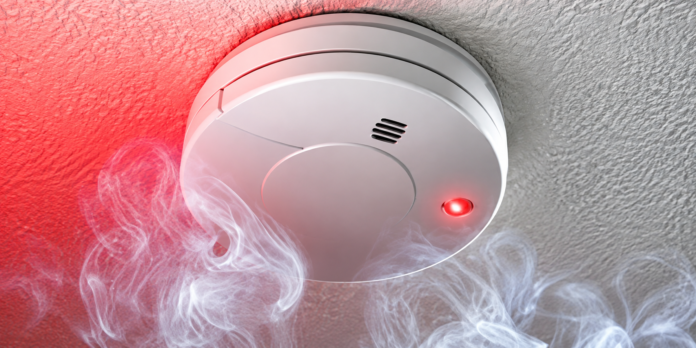
A smoke detector is an electronic fire protection device that automatically alarms in the presence of smoke as a key indication of fire.
Smoke detectors are important for safeguarding buildings against fire. However, the improper disposal may pose environmental hazards including radiation related hazards for those with radioactive sources incorporated into them.
They are used as residential or commercial security devices which send a signal to a fire alarm control panel while smoke alarms issue a visual or an audible alarm locally.
They may be found in commercial buildings, households, schools and institutions of higher learning, hospitals and office buildings, among others.

Types of smoke detectors

There are six types of smoke detectors:

  1. Ionization smoke detector – An ionization smoke detector uses ionization of air and a consequent drop in the current to detect smoke and fire. It uses a radioisotope such as americium-241 to ionize the air particles.
  2. Photoelectric or optical smoke detector
    A photoelectric smoke detector, also known as a light detector, is a light sensor. The components of a typical light sensor are: Optical Chamber, Cover, Case Moulding, Photodiode, and Infrared LED. Light from the LED is converted into a beam with the help of a lens. This light is then directed towards the photodiode which detects this light continuously.
  3. Carbon Monoxide and Carbon Dioxide Detection – used to detect smoke or combustion based on the presence of carbon monoxide or carbon dioxide in the air.
  4. Aspirating or air sampling detector – analyzes the sample of air to detect the presence of combustion elements in the air.
  5. Video Smoke Detection – detects smoke based on the video feedback of the area. This detection is volume-based as opposed to point-based and is hence more effective with the use of several techniques.
  6. Optical Beam Detectors – smoke is detected usually based on the principle of light obscuration. The light coming from an LED is obstructed by the dense smoke which is signaled as fire detection to the alarm system and sets it off.

However, out of the six types of smoke detectors, the commonly used types are passive smoke detectors namely photo electric (optical) and ionization detectors.
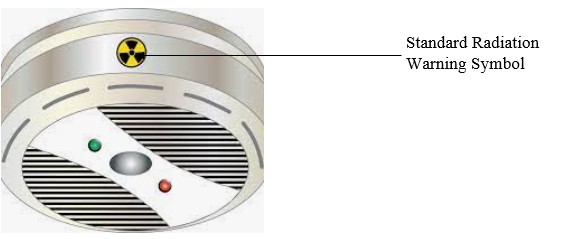
Ionization detectors are distinguished from others by having a standard radiation warning symbol (black on a yellow back ground) firmly affixed to them as shown below;

Disposal of ionization smoke detectors from radiation safety perspective

A typical ionization smoke detector has a working life of 10 years. This implies that at the end of the working period it will be regarded as solid waste and should be disposed off as per the national regulations regarding disposal of solid waste. However, from the radiation safety perspective, due to the radioactive material they contain, ionization smoke detectors should not be disposed off anyhow and anywhere.
Important to note is that whereas the radiation emitted from one smoke detector is of no radiological significance, an accumulation of disused ionization smoke detectors can have some radiological significance.

Risks associated with improper disposal of ionization smoke detectors

Ionization smoke detectors are of concern because they contain radioactive material to detect smoke. Whereas the radiation emitted from smoke detectors is low, prolonged exposure can lead to the exposed person suffering long-term effects of radiation including cancer. It is a known fact that even small amounts of radiation can cause radiation health effects in case of prolonged exposure, the most observable effect is cancer.
Smoke detectors containing alpha emitting radionuclides are of no significance in regard to external exposure. However, when ingested, they are of radiological significance.
In general, the external radiation dose to the occupants during normal use of ionization smoke detectors is very small and does not pose a health risk.
The safety of the ionization smoke detectors is ensured by the small amounts of radioactive material and the secure means of its encapsulation even during a fire. However, tampering with their encapsulation especially can result into;

  1. The possibility of polluting the environment resulting in long-term radiation exposures.
  2. Unintended and unjustified exposure.
  3. Radiation poisoning in case the radioactive source is ingested.

Regulatory requirements for smoke detectors containing radioactive material

Pursuant to Regulation 61 of Atomic Energy Regulations, 2012 all importers/distributors of ionization smoke detectors should;

  1. Ensure that the activity levels in ionization smoke detectors are below the exemption levels. The exemption levels for the common radionuclides contained in smoke detectors is 1 Bq/g for Am-241 and Pu-239 and 100,000 Bq/g for Kr-85
  2. Ensure that legible and prominently featuring radioactive labels are visibly and firmly affixed to each consumer product and its package, stating, in the English language, that the product contains radioactive materials
  3. Ensure that basic information and instructions on the precautions of use and disposal of the product, written or translated in English, are made available with the product.

Advice to the public

  1. Importers/distributors/users may opt for other types of smoke detector technologies other than those containing radioactive material. This is to avoid accumulation of radioactive waste in the country and possible radiation exposure in case of mismanagement.
  2. All smoke detectors with the radiation warning symbol firmly affixed onto them should not be disposed of anywhere and anyhow. Owners of such devices should request for assistance from Atomic Energy Council.
  3. Improper manipulation or dismantling of ionization smoke detectors should be avoided.
  4. Scrap dealers should be able to identify, isolate ionization smoke detectors and inform Council for further management.
  5. All persons with disused ionization smoke detectors should contact Council using the below address for their proper disposal.

Nuclear Medicine Practices in Uganda

Nuclear Medicine in Uganda

A radiotracer through a pill, injection, or gas is administered to a patient. Radiotracers give off gamma rays that can be detected by special cameras. Nuclear medicine experts analyze the images and send a report to the doctor who ordered for the test. Nuclear medicine treatment also uses a small amount of radioactive material (radiopharmaceuticals) which are administered to a patient. Radiopharmaceuticals attach to specific cells and then deliver a high dose of radiation and destroy them.

Applying Nuclear Medicine in Uganda

Are Nuclear Medicines tests and treatments painful?

Nuclear medicine procedures are usually painless. Injections under the skin performed for lymphoscintigraphy scans cause local pain for a few seconds. However, a patient may feel uncomfortable to remain still or to stay in one position.  Children also find it difficult to be motionless still during the test.

Does a patient remain Radioactive after under going Nuclear Medicine procedure/scan?

Yes, the patient will be radioactive after a nuclear medicine procedure. However, the patients become non-radioactive after a few days because the radioactive materials of short half lives are used.

Are Nuclear Medicine tests and treatments safe?

Yes, nuclear medicine procedures are safe, provided Nuclear medicine experts carefully select the radiotracer and radiation dose to ensure the minimum radiation exposure and maximum accuracy.

Can any person have a Nuclear Medicine scan or treatment?

Anyone can have a nuclear medicine scan. However, breastfeeding mothers may need to stop breasting for a short time after the test. This is due to the small amount of radioactivity in their bodies which may pass to the breast milk. Also pregnant persons need to notify the nuclear medicine physician for guidance.

How should I prepare for a Nuclear Medicine examination?

  1. You may wear a gown during the exam or be allowed to wear your own clothing
  2. Women should always tell their doctor and technologist if they are pregnant or breastfeeding
  3. Tell the doctor and your exam technologist about any medications you are taking, including vitamins and herbal supplements. List any allergies, recent illnesses, and other medical conditions
  4. Leave jewelry and accessories at home or remove them prior to the exam. These objects may interfere with the procedure.
  5. Follow instructions given by medical personnel.

What will I experience during and after a Nuclear Medicine procedure?

  1. Except for intravenous injections, most nuclear medicine procedures are painless. Reports of significant discomfort or side effects are rare.
  2. You will feel a slight pin prick when the technologist inserts the needle into your vein for the intravenous line. You may feel a cold sensation moving up your arm during the radiotracer injection. Generally, there are no other side effects
  3. You may experience nothing. Radiotracers have little or no taste. Inhaling a radiotracer feels no different than breathing the air around you or holding your breath
  4. With some procedures, the technologist may place a catheter into your bladder that can cause temporary discomfort.
  5. Discomfort during examination since you may need to remain still or in one position for long periods.

What safety measures should be undertaken for the Protection of Patients and the Public?

  1. Patients undergoing therapy should not be discharged from the hospital until it is determined to be safe by medical practitioner.
  2. Patients are exposed to prescribed doses.
  3. Patient information from previous and similar examinations is taken into consideration to avoid unnecessary additional exposure.
  4. Administering of radionuclides to pregnant women is avoided unless there are strong clinical indicators.
  5. Administering of radionuclides to children for diagnostic procedures is carried out only if there is a strong clinical indication.
  6. Breast feeding of mother undergoing any nuclear medicine procedure should be discontinued until the radiopharmaceutical is considered harmless to the body

What are the Authorisation Requirements for Establishing Nuclear Medicine Facility in Uganda?

  • Submit to Council, the structural and architectural drawings of the proposed facility for approval.
  • Upon approval, proceed with the construction according to the approved plan. Any modifications should be brought to the attention of Council for approval.
  • During the construction, invite Council for verification of each completed phase that has radiation protection and safety concerns.
  • Apply to Council for permit to use the radiation premises.
  • Apply for all other necessary authorizations to operate a nuclear medicine facility.

Conclusion

Nuclear medicine procedures play a vital role in the diagnosis and treatment of diseases. However, these procedures must be conducted by qualified people and in accordance with ethical and professional standards.

Introduction

Nuclear Medicine practice in Uganda started in 1973 under the Department of Physiology, Makerere University Medical School. The unit was formed as a joint venture between Makerere University and Mulago National Referral Hospital. By 2013, the Nuclear Medicine Unit was registering approximately 3000 patients per annum before the total breakdown of the Gamma camera in 2014. In 2016, the Unit embarked on renovations and the facility is non-functional to-date. Patients are referred to outside countries.

What is Nuclear Medicine?

Nuclear Medicine is the specialty that utilizes unsealed radioisotopes in the form of radio-pharmaceuticals to investigate disorders of anatomy, physiology and patho-physiology for diagnosis and/or treatment of diseases.

What is Nuclear Medicine used for?

Nuclear Medicine procedures are used for diagnosis/treatment of many types of cancers, cardiac disease, endocrine & neurological disorders.

How is Nuclear Medicine used to diagnose and treat diseases like cancer?

A radiotracer through a pill, injection, or gas is administered to a patient. Radiotracers give off gamma rays that can be detected by special cameras. Nuclear medicine experts analyze the images and send a report to the doctor who ordered for the test. Nuclear medicine treatment also uses a small amount of radioactive material (radiopharmaceuticals) which are administered to a patient. Radiopharmaceuticals attach to specific cells and then deliver a high dose of radiation and destroy them.

Applying Nuclear Medicine in Uganda

Are Nuclear Medicines tests and treatments painful?

Nuclear medicine procedures are usually painless. Injections under the skin performed for lymphoscintigraphy scans cause local pain for a few seconds. However, a patient may feel uncomfortable to remain still or to stay in one position.  Children also find it difficult to be motionless still during the test.

Does a patient remain Radioactive after under going Nuclear Medicine procedure/scan?

Yes, the patient will be radioactive after a nuclear medicine procedure. However, the patients become non-radioactive after a few days because the radioactive materials of short half lives are used.

Are Nuclear Medicine tests and treatments safe?

Yes, nuclear medicine procedures are safe, provided Nuclear medicine experts carefully select the radiotracer and radiation dose to ensure the minimum radiation exposure and maximum accuracy.

Can any person have a Nuclear Medicine scan or treatment?

Anyone can have a nuclear medicine scan. However, breastfeeding mothers may need to stop breasting for a short time after the test. This is due to the small amount of radioactivity in their bodies which may pass to the breast milk. Also pregnant persons need to notify the nuclear medicine physician for guidance.

How should I prepare for a Nuclear Medicine examination?

  1. You may wear a gown during the exam or be allowed to wear your own clothing
  2. Women should always tell their doctor and technologist if they are pregnant or breastfeeding
  3. Tell the doctor and your exam technologist about any medications you are taking, including vitamins and herbal supplements. List any allergies, recent illnesses, and other medical conditions
  4. Leave jewelry and accessories at home or remove them prior to the exam. These objects may interfere with the procedure.
  5. Follow instructions given by medical personnel.

What will I experience during and after a Nuclear Medicine procedure?

  1. Except for intravenous injections, most nuclear medicine procedures are painless. Reports of significant discomfort or side effects are rare.
  2. You will feel a slight pin prick when the technologist inserts the needle into your vein for the intravenous line. You may feel a cold sensation moving up your arm during the radiotracer injection. Generally, there are no other side effects
  3. You may experience nothing. Radiotracers have little or no taste. Inhaling a radiotracer feels no different than breathing the air around you or holding your breath
  4. With some procedures, the technologist may place a catheter into your bladder that can cause temporary discomfort.
  5. Discomfort during examination since you may need to remain still or in one position for long periods.

What safety measures should be undertaken for the Protection of Patients and the Public?

  1. Patients undergoing therapy should not be discharged from the hospital until it is determined to be safe by medical practitioner.
  2. Patients are exposed to prescribed doses.
  3. Patient information from previous and similar examinations is taken into consideration to avoid unnecessary additional exposure.
  4. Administering of radionuclides to pregnant women is avoided unless there are strong clinical indicators.
  5. Administering of radionuclides to children for diagnostic procedures is carried out only if there is a strong clinical indication.
  6. Breast feeding of mother undergoing any nuclear medicine procedure should be discontinued until the radiopharmaceutical is considered harmless to the body

What are the Authorisation Requirements for Establishing Nuclear Medicine Facility in Uganda?

  • Submit to Council, the structural and architectural drawings of the proposed facility for approval.
  • Upon approval, proceed with the construction according to the approved plan. Any modifications should be brought to the attention of Council for approval.
  • During the construction, invite Council for verification of each completed phase that has radiation protection and safety concerns.
  • Apply to Council for permit to use the radiation premises.
  • Apply for all other necessary authorizations to operate a nuclear medicine facility.

Conclusion

Nuclear medicine procedures play a vital role in the diagnosis and treatment of diseases. However, these procedures must be conducted by qualified people and in accordance with ethical and professional standards.

Regulation of Non Ionizing Radiation in Uganda

Regulation of NIR from Telecom Masts and Powerlines in Uganda

Introduction

“Non-ionizing radiation” means all forms of radiation and fields of the electromagnetic spectrum that do not normally have sufficient energy to produce ionization in matter; characterized by energy per photon less than about 12 milli-electron-Volt, which is equivalent to wavelength greater than 1mm, or frequencies lower than 3 x 10¹⁵ Hertz (It is weaker than ionizing radiation).

Applications of non-ionizing radiation

There are numerous sources of non-ionizing radiation around us that may be artificial or natural sources. The artificial sources include telecommunication towers, high voltage power transmission lines, Magnetic Resonance Imaging (MRI) machines, radars, microwave ovens, metal detectors, welding torches, television remote controls among others while the natural sources include the sun, fire, celestial bodies, the earth and some plants and animals. These sources emit different types of radiation as indicated in figure 1 and thus some may warrant regulatory control like the base stations, MRI machines, high voltage power lines. Those that may not warrant regulatory control include the sun and fire. Welding torches, metal detectors, microwave ovens, television remote controls require that the devices meet the standards. The applications have both social and economic benefits like the use of MRI machines, base station and high voltage power lines utilized in the medical, telecommunication and electricity industries respectively.

Non-Ionizing Radiations in Uganda
Figure 1: Electromagnetic Spectrum

Health and Biological Effects

Whereas non-ionizing radiation plays an important role in our lives, prolonged exposure to high levels of the radiations can be detrimental to human health and the environment. The radiation interacts with matter at the atomic level, at which they deposit the energy they carry into the atoms. On a large scale, the energy deposited translates into cellular and tissue heating in living organisms that may escalate into a wide range of possible health effects for intense exposures. A number of epidemiological studies have been conducted globally and there is an indication that a number of probable health effects that may occur as a result of excessive exposure to radiation from sources of non-ionizing radiation. Although inconclusive, some studies attribute some forms of cancers (such as childhood leukemia), headaches, nerve stimulation, fatigue, insomnia, sterility, and infertility among many others to being exposed to non-ionizing radiation.

Measurements have shown that environmental levels of non-ionizing radiation typically encountered by the general public are below levels necessary to produce significant or easily noticeable biological effects. However, there may be situations, particularly workplace environments near high-powered sources, where recommended limits for safe exposure of human beings to non-ionizing radiation could be exceeded. In such cases, safety measures or actions may be necessary to ensure the protection of the people. Non-ionizing radiation may result in both biological and health effects as a result of the prolonged exposure to the radiation as indicated in below.

Some of the biological effects of non-ionizing radiation include;

  • Short-term/temporary conditions induced by exposure to high radiation intensities (even for a short time).
  • Result from tissue heating by radiation energy deposition in cells
  • Vulnerable organs include brain, eyes, heart, and digestive organs – they are too thick for effective heat dissipation
  • Headache, dizziness, insomnia, nausea, fatigue, digestive disorder, cardiac stress, among others

The health effects of non-ionizing radiation include;

  • Detectable impairment on the health of an individual or offspring, requiring a medical intervention to reverse.
  • Blood leukemia, glioma (cancer of nerve and brain cells), Alzheimer’s disease (memory impairment), eye cataracts, and sterility (damaged sperms)
  • Vulnerable organs: brain, nerves, eyes, blood, bone marrow, testes and skin: – sensitive and prone to electrochemical and photochemical reactions

NB: NIR health effects are not confirmed, research studies are currently still ongoing.

Regulatory Infrastructure for Non-Ionizing Radiation

The Uganda Communications Commission regulates the Communications sector, which includes Telecommunications, Broadcasting, radio communication, postal communications, data communications and infrastructure. The Uganda National Bureau of Standards regulates standards of equipment including those that generate non-ionizing radiation. The Atomic Energy Council is responsible for protecting individuals, society and the environment from radiation exposure from the applications of non-ionizing radiation.

Role of AEC in ensuring Radiation Protection and Safety from Non Ionizing Radiation

Section 2(3) of the Atomic Energy Act No.24 of 2008 and the Atomic Energy (Application of provisions of the Atomic Energy, 2008 to sources of Electromagnetic Radiation) Order, 2023, mandates Council to regulate the sources of electromagnetic radiation other than X-rays and gamma rays.

In this regard, the Council is conducting a nationwide assessment of radiofrequency (RF) and electromagnetic field exposure levels. The assessments are currently being carried out in public places. Figure 2 and 3 show AEC inspectors conducting assessments at High Voltage lines and telecommunication masts respectively. The measurements from the assessment exercise indicate that the radiation levels are below the maximum recommended safety guidelines at all the surveyed locations so far.

Uganda Non Ionizing Radiation Inspections and Surveys

What can be done to ensure Radiation Protection from Non-Ionizing Radiation

  • The public should maintain the safe distances from the sources of non-ionizing radiation.
  • The installers/commissioners of telecommunication masts should comply with the national standards.
  • The wayleaves for the power transmission lines should be respected.
  • Periodic assessments should be conducted to determine the extent of radiation exposure from the sources of non-ionizing radiation.

Conclusion

Non-ionizing radiation sources AEC has established a regulatory framework to:

  • Allay public (and political) fears and concerns on the safety of exposure to environmentally prevalent levels of NIR
  • Ensure that operators and sources do not emit radiation levels that are beyond the regulatory/safe limits.

Accounting and Control of Nuclear Material in Uganda

Safeguards in Uganda - Accounting and Control of Nuclear Materials

Introduction

Nuclear technology can be used for a number of peaceful purposes, ranging from generating electric power to producing radioisotopes for medical diagnosis, cancer treatment and research. Despite its several uses, it poses a unique risk, including the possibility of misuse in developing nuclear weapons. According to the Treaty on Non-Proliferation of Nuclear Weapons, nuclear materials are supposed to be used for only peaceful purposes. However, with the increasing threat of nuclear terrorism, the use of these materials for non-peaceful purposes is probable. Therefore, there is a need to account and control nuclear materials regardless of their quantities, wherever they are. Nuclear material accounting and control involves physical verification and inventory taking of the nuclear material, and putting in place measures or systems to protect the nuclear material from misuse both on and away from the site.

Uganda became a member of the International Atomic Energy Agency (IAEA) in 1967. It signed the Non – Proliferation Treaty on October 20, 1982, and the Comprehensive Safeguards Agreements on May 25, 2006. Under these agreements, Uganda is obliged to, among other requirements, establish a State System of Accounting for and Control of Nuclear Material and report on nuclear material in the country on a quarterly and annual basis.

Safeguards implementation in Uganda

Safeguards are a set of technical measures that allow the IAEA to independently verify a State’s legal commitment not to divert nuclear material from peaceful nuclear activities to nuclear weapons or other nuclear explosive devices. Pursuant to the IAEA’s Statute, which authorizes the IAEA to establish and administer safeguards, States accept the application of such measures through the conclusion of safeguards agreements with the IAEA.

According to article 2(a)(iii) of the Safeguards Agreement that Uganda concluded with the IAEA, all nuclear material regardless of the quantities must be declared. The Atomic Energy Act No. 24 of 2008 established the Atomic Energy Council (AEC) as a body corporate with the mandate of regulating the peaceful use of ionizing radiation in Uganda for the protection and safety of individuals, society and the environment. Uganda, through the Atomic Energy Council as the designated authority, has the responsibility of reporting information regarding nuclear material in the country to the Agency. This information is collected from the stakeholders who utilize nuclear material in their applications.

In Uganda, small quantities of nuclear material (depleted uranium) are used as shielding materials for devices/equipment housing radioactive sources used in the medical and industrial fields.

Some of the materials that fall under Safeguards include;

  1. Plutonium -239
  2. Uranium – 233 and 235
  3. Source material (natural Uranium, depleted Uranium and Thorium)
  4. Uranium and Thorium ore concentrates

Some of the material that is not under Safeguards is;

  1. thorium in lantern mantles, welding rods, light bulbs, lenses or optical components, and electronic components
  2. natural uranium, depleted uranium or thorium as a minor constituent in an alloy which is not being used for its nuclear properties.
  3. natural uranium, depleted uranium or thorium used as a colorant, pigment, stain or glaze
  4. nuclear material as contamination at activity concentrations equal to or less than the exemption quantities

In a bid to ensure that the nuclear material is not diverted for non-peaceful purposes, AEC received some inspectors from the IAEA from May 12-13, 2022, to conduct independent safeguards inspections and verify the physical inventory of the small quantities of nuclear material in the country located at some facilities.

AEC Safeguards Workshop
Participants pose for a group photo after the meeting at AEC premises on Bukoto Street

Relatedly, AEC conducts periodic inspections at facilities where nuclear material is suspected to be applied like in research institutions, laboratories and universities across the country. The objective is to verify and establish the quantities of nuclear materials present at these institutions and the purpose of use to ensure compliance with the Safeguards agreements.

AEC Safeguards Inspections
AEC inspectors and facility staff after a Safeguards inspection at one of the laboratories in Uganda

Conclusion

The implementation of safeguards by all States would, in the long run, result in the application of nuclear material in peaceful activities and thus promote a global nuclear non-proliferation regime. Therefore, all persons/entities/institutions that could be using nuclear material in their operations should notify the Atomic Energy Council for inventory change as per the safeguards agreement.

Report a Radiation Incident

If you suspect that an incident or an accident may have involved a radioactive material, please report to the nearest police station and to the Atomic Energy Council on the contacts provided below. Stay as far away from the scene of the incident as possible.

Atomic Energy Council, Plot 40, Bukoto Street, P.O Box 7044, Kampala. Tel: +256-417 101700 Toll free: 0800100488 Website: www. atomiccouncil.go.ug Email: admin@atomiccouncil.go.ug


Transport of Radioactive Material in Uganda

AEC Procedures on Transport of Radioactive Materials in Uganda

Introduction

The use of radioactive material in the different sections of the economy in Uganda involve transportation. The transportation of radioactive material is more prominent during import and export, and for mobile devices that require movement from one site to another.

During transportation of radioactive material, there is a potential risk of radiation exposure to members of the public and vehicle crew members in case of an incident or accident if not safely and securely transported since the radioactive material spontaneously emit ionizing radiation. The Atomic Energy Council therefore, establishes requirements for safety and security of radioactive material during transport.

Regulation of Transport of Radioactive Material by Atomic Energy Council

Transportation of radioactive material is regulated by Atomic Energy Council in accordance with Section 32 of the Atomic Energy Act No. 24 of 2008 and Part XII of the Atomic Energy Regulations, 2012.

All persons who intend to transport radioactive material are required to seek for authorization from Atomic Energy Council as per Section 32(1) of the Atomic Energy Act No. 24 of 2008 and Regulation 19 of the Atomic Energy Regulations, 2012. Such authorization is in form of transport permit and issued by the Council. The transporter may also seek for other applicable authorizations from other authorities within the country.

AEC conducts inspections on the transport units as shown in figure 1 below, on site and off site to verify compliance with applicable transport requirements.

Transport of Radioactive Materials in Uganda
Figure 1: Conducting of radiation survey measurements around the transport unit

Safety and Security Measures during Transport of Radioactive Material

During transport of radioactive material, the authorized person or entity must ensure that safety measures are in place to reduce radiation exposure to the members of the public and vehicle crew members, and to avoid accidents or incidents that may lead to damage or rapture of the radioactive material. Such safety measures may include;

  1. Taking radiation survey measurements before transport of radioactive material;
  2. Not allowing persons to be in close proximity with radioactive material during transport;
  3. Labelling packages with appropriate warning symbols;
  4. Providing appropriate training in radiation protection, and safety to persons involved in the transport of radioactive material;
  5. Equipping the transport unit with fire-fighting equipment;
  6. Carrying proper documentations as required by the Council, among others.

Furthermore, the authorized person or entity is required to establish measures to ensure protection of the radioactive material from un authorized access. Among other security measures include:

  1. Securely locking the back of the transport unit as shown in figure 2;
  2. Not leaving the transport unit un-attended to in-case of stop-overs;
  3. Ensuring continuous communication amongst the involved parties;
  4. Conducting background checks for trustworthiness and reliability of persons involved in transport commensurate with their responsibilities;
  5. Developing, implementing and periodically reviewing the transport security plan for high activity radioactive material;
  6. Applying additional physical security in form of escorts or guards for high activity radioactive material as shown in figure 3 below, among others

Guidelines on Transport of Radioactive Materials

Responding to Radiological Emergencies during Transport of Radioactive Material

In case of an incident during transport of the radioactive material, the authorized person should immediately contact the relevant authorities and notify Atomic Energy Council immediately through the emergency toll free line: 0800100488

Report a Radiation Incident

If you suspect that an incident or an accident may have involved a radioactive material, please report to the nearest police station and to the Atomic Energy Council on the contacts provided below. Stay as far away from the scene of the incident as possible.

Atomic Energy Council, Plot 40, Bukoto Street, P.O Box 7044, Kampala. Tel: +256-417 101700 Toll free: 0800100488 Website: www. atomiccouncil.go.ug Email: admin@atomiccouncil.go.ug


Nuclear Industry Cyber Hacking and Espionage Threats

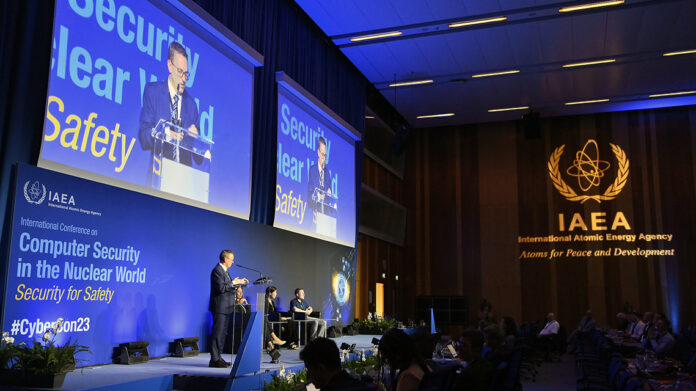
AEC at IAEA #CyberCon23

Worldwide, hackers are pursuing nuclear facilities, which are some of the most heavily regulated facilities in Uganda. Nuclear facilities use nuclear technologies during their operations. Despite the safeguards and nuclear security measures, the opportunities for espionage and much worse have them alluring to hackers.

In Uganda, nuclear technology applications are used in practices like medical, industrial, agricultural and research for irradiation, well logging, cargo scanning, radiotherapy, nuclear medicine and nuclear gauging. Such nuclear applications are vulnerable to cyber hacking and espionage threats.

The recent cyber-attacks on critical infrastructure in various countries, including a ransomware attack on Düsseldorf University hospital in Germany that caused a patient’s death (BBC News, 2020), have highlighted the risks of cyber threats to public health and safety. The nuclear industry is no exception, as it relies on computer systems and networks for various functions, from controlling medical equipment to managing physical access to areas with radiation sources.

However, the security of these systems is not always guaranteed, as hackers and spies can exploit vulnerabilities and weaknesses to steal sensitive data, sabotage operations, or cause nuclear accidents. For instance, a cyber-attack on a radiotherapy machine could change its settings and harm patients, or a theft of nuclear material could lead to its illicit use by terrorists or rogue states leading to catastrophic consequences.

Therefore, it is crucial for the nuclear industry in Uganda, as well as other countries, to strengthen their cyber security measures and practices. This includes investing in secure networks, access controls, encryption, backups, testing, and continuous training of staff and stakeholders about the imminent cyber threat. It also involves collaborating with government agencies, regulators, and international organizations to share information and expertise on emerging threats and best practices.

Atomic Energy Council (AEC), which has the responsibility to regulate and monitor the use of radiation sources in the country, recognized the importance of cyber security and is working on improving its regulatory framework and monitoring systems to ensure that appropriate security measures are in place by facilities to prevent unauthorized access and potential cyber threats to operational technology (OT) and informational technology (IT) systems.

The current legislative regime to regulate the safe and secure use of nuclear technologies includes the Atomic Energy Act No. 24 (2008) and the Atomic Energy (Security of Radioactive Materials) Regulations (2021). While the legislative regime for the ICT sector includes the Uganda Computer Misuse (Amendment) Act (2022) and the National Information Security Framework (NISF) (2014). These laws do not directly address the cyber security requirements for the nuclear industry as recommended by the International Atomic Energy Agency (IAEA) safety and security standards (Nuclear Security Series No.42 G, 2021). AEC is in the process of developing a national regulation on cyber security in the nuclear industry.

In conclusion, Uganda’s nuclear industry is vulnerable to cyber hacking and espionage threats that require urgent and concerted actions to mitigate and prevent. The government agencies, the private sector and international organizations must work together to ensure the safety, security, and resilience of the nuclear industry and its users, and to protect public health and the environment from the dangers of ionizing radiation as a result of cyber threats.